
Stop Weather Worries: Why Your Orchard Needs Anti-Hail Protection Now
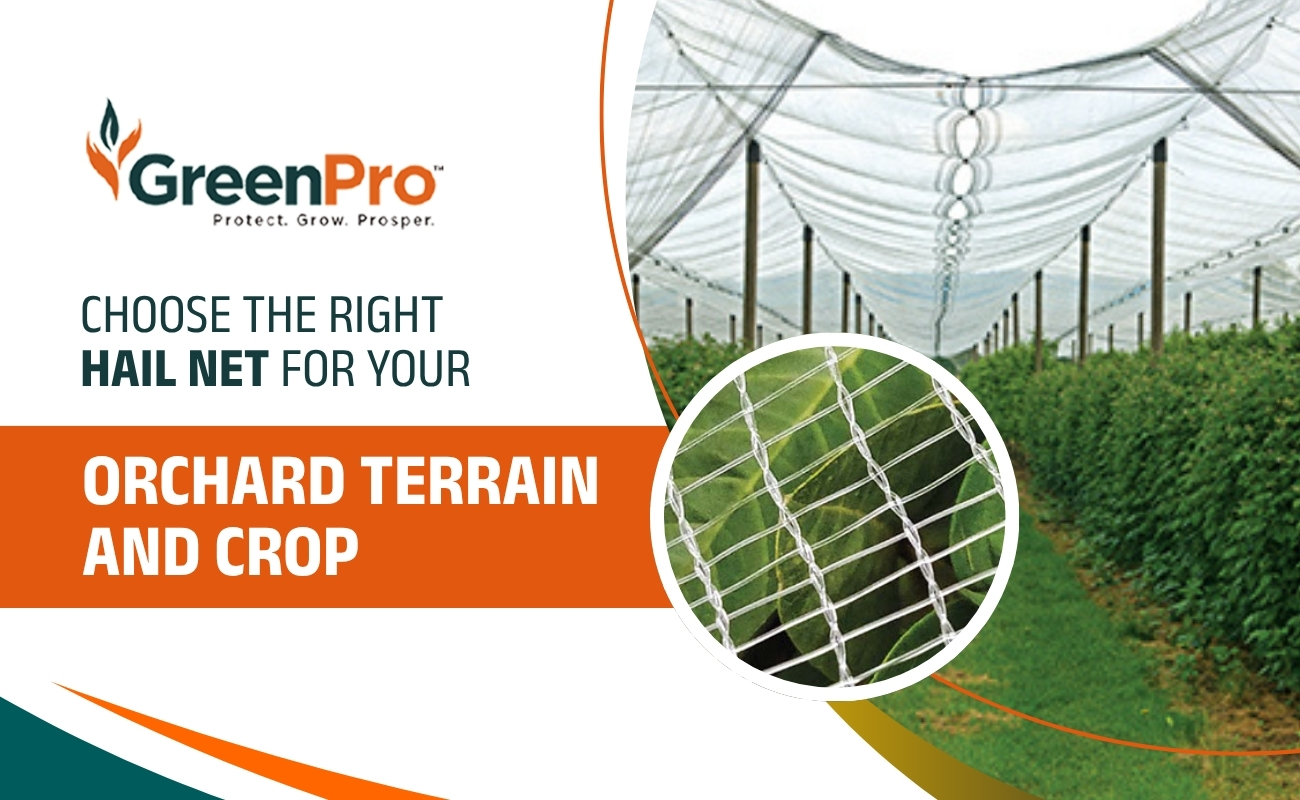
An anti-hail net has become one of the most practical investments an orchard owner can make. A single hailstorm can flatten fruit, split bark, and strip leaves within minutes, undoing months of watering, pruning, and pest control in one afternoon. Weather does not send a warning before it strikes. This blog looks at how bad weather damages an orchard, what an anti-hail net actually does, which orchards need it most, and what to check before you buy one.
How Bad Weather Damages an Orchard
Hail is not the only threat, but it is often the most sudden and the most costly. Hailstones bruise and split fruit skin on contact, which makes the produce unfit for the fresh market even when the tree itself survives. Leaves get shredded, which slows photosynthesis at exactly the point in the season when the plant needs energy for fruit development.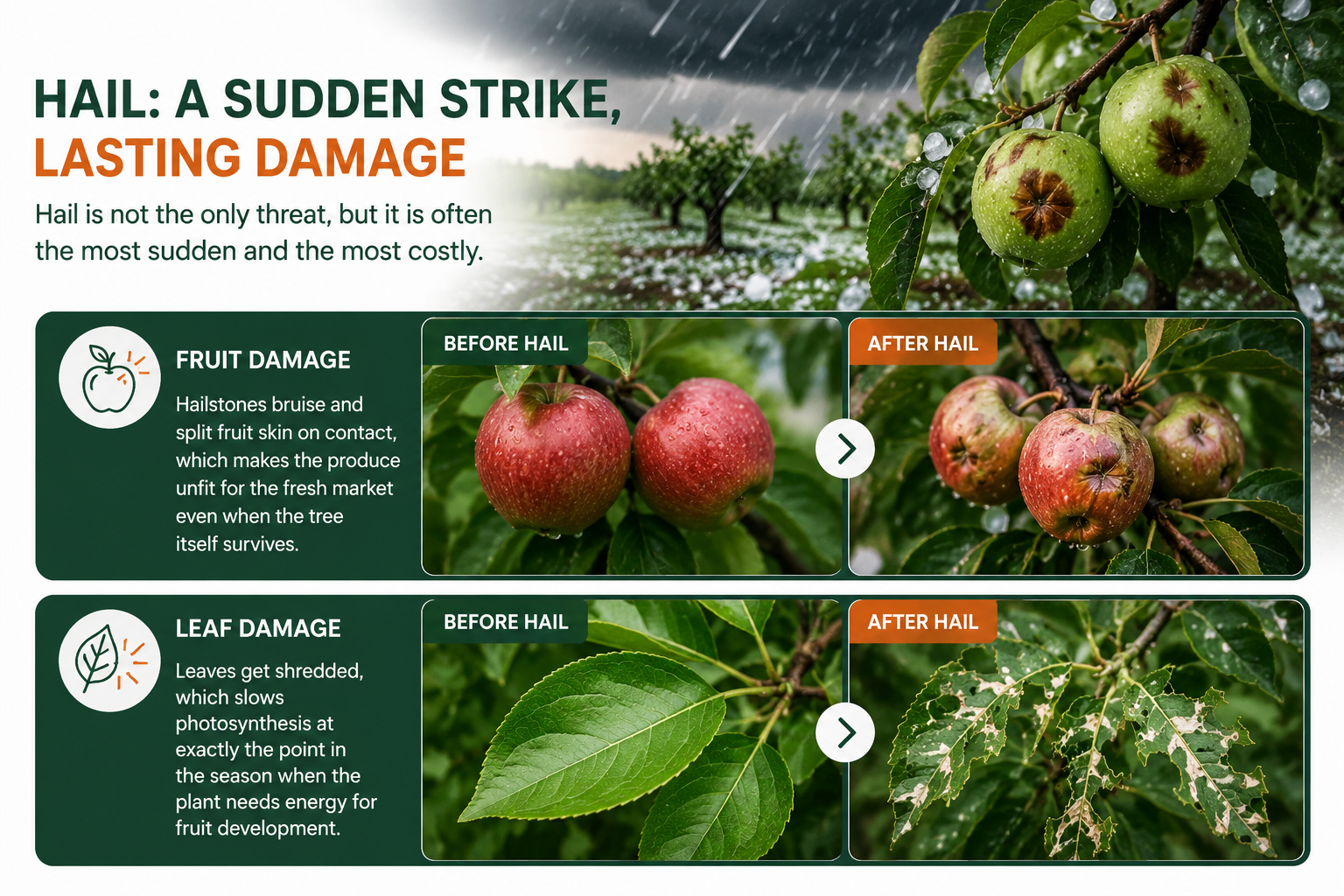 The damage does not stop at the surface. Bruised or split fruit rots faster and attracts fungal infection. Bark wounds from hail impact open the tree up to disease and pest entry for months afterwards. Strong wind that often comes with a hailstorm can also snap young branches and knock unripe fruit straight to the ground.
For an orchard, the financial hit is layered. There is the fruit lost on the day of the storm, the fruit lost to rot in the following weeks, and the reduced yield the next season from a stressed, damaged tree. One bad storm at the wrong time can wipe out a year’s income.
What Is an Anti-Hail Net
An anti-hail net is a woven or knitted mesh fabric, usually made from UV-stabilised HDPE, stretched above or around the orchard canopy. It sits on a support structure of poles and wires, forming a roof between the sky and the fruit.
When hailstones fall, the net absorbs the impact instead of letting it reach the tree. The stones lose their force against the mesh and slide off or melt away, while the fruit underneath stays untouched. The same net also softens harsh sunlight and slows down strong wind gusts passing through the canopy.
Why Use an Anti-Hail Net
The case for an anti-hail net comes down to reliability. Chemical sprays and manual netting during a storm warning depend on timing, and hail rarely gives enough notice to react. A net installed ahead of the season works around the clock, storm or no storm.
It also protects more than the fruit itself. A well-fitted net reduces sunburn on exposed fruit, keeps birds and larger pests off the canopy, and cuts down wind stress on branches. Many orchard owners see steadier fruit size and colour once a net is in place, since the tree is no longer recovering from repeated weather stress every few weeks.
Which Orchards Need Anti-Hail Net Most
Hail risk is not the same everywhere, but certain orchards carry higher exposure and higher stakes if a storm hits.
Apple and pear orchards are frequent hail net users, since even light bruising drops the fruit out of premium grade. Grape and kiwi vineyards need protection too, as their thin skins mark easily under impact. Pomegranate and citrus orchards, along with mango belts in hail-prone regions, also benefit, since fruit close to harvest is the most vulnerable to total loss.
Orchards in hilly or high-altitude regions, where hailstorms are more frequent and less predictable, see the fastest return on a hail net investment. If your region has recorded even one damaging hailstorm in recent years, the risk is worth planning for.
Benefits of Using an Anti-Hail Net
A hail net protects the current season’s fruit from impact damage, which is the most immediate benefit. Beyond that, it holds up season after season if chosen well, with a properly UV-stabilised net lasting several years under regular sun exposure.
It also does more than one job at once. The same structure that blocks hail keeps birds and some larger pests away, softens direct sunlight to reduce sunburn on fruit, and breaks the force of strong wind moving through the orchard. For growers weighing the cost of a net against repeated crop losses, this multi-purpose protection is often what tips the decision.
Protect Your Harvest Before the Next Storm
Weather does not wait for a good season, and a single hailstorm can undo a year of orchard work in minutes. An anti-hail net gives your fruit a fighting chance against the one risk you cannot control with irrigation or spraying.
GreenPro Ventures manufactures anti-hail nets built with tightly bound, UV-stabilised mesh designed to hold up against real storm conditions across Indian orchards. As a trusted hail net manufacturer, GreenPro Ventures can help you choose the right structure and mesh for your crop and terrain. Explore GreenPro Ventures’ anti-hail net range before the next storm season arrives.
FAQ
[/vc_row]Install an anti-hail net over the orchard canopy before hail season begins. The net absorbs the impact of falling hailstones so they never reach the fruit or branches, preventing bruising, splitting and bark damage.
Set up a hail net supported on poles and wires above the canopy, sized to your orchard layout. Choose UV-stabilised mesh so the net holds up across seasons, and check the structure before every storm season.
Mild leaf damage often recovers with normal care, but bruised or split fruit does not heal and usually cannot be sold fresh. Repeated hail damage over several seasons can weaken the tree and lower future yields.
Hail leaves round bruises, cuts or dents on fruit skin, torn or shredded leaves, and small wounds on bark and stems. Damaged fruit often rots faster and can invite fungal infection at the wound site.
A UV-stabilised anti-hail net typically lasts several years with proper installation and care. Regular checks for tears, loose ties or sagging sections help catch wear early and keep protection consistent each season.