How to Choose the Right Shade Net Percentage for Different Crops
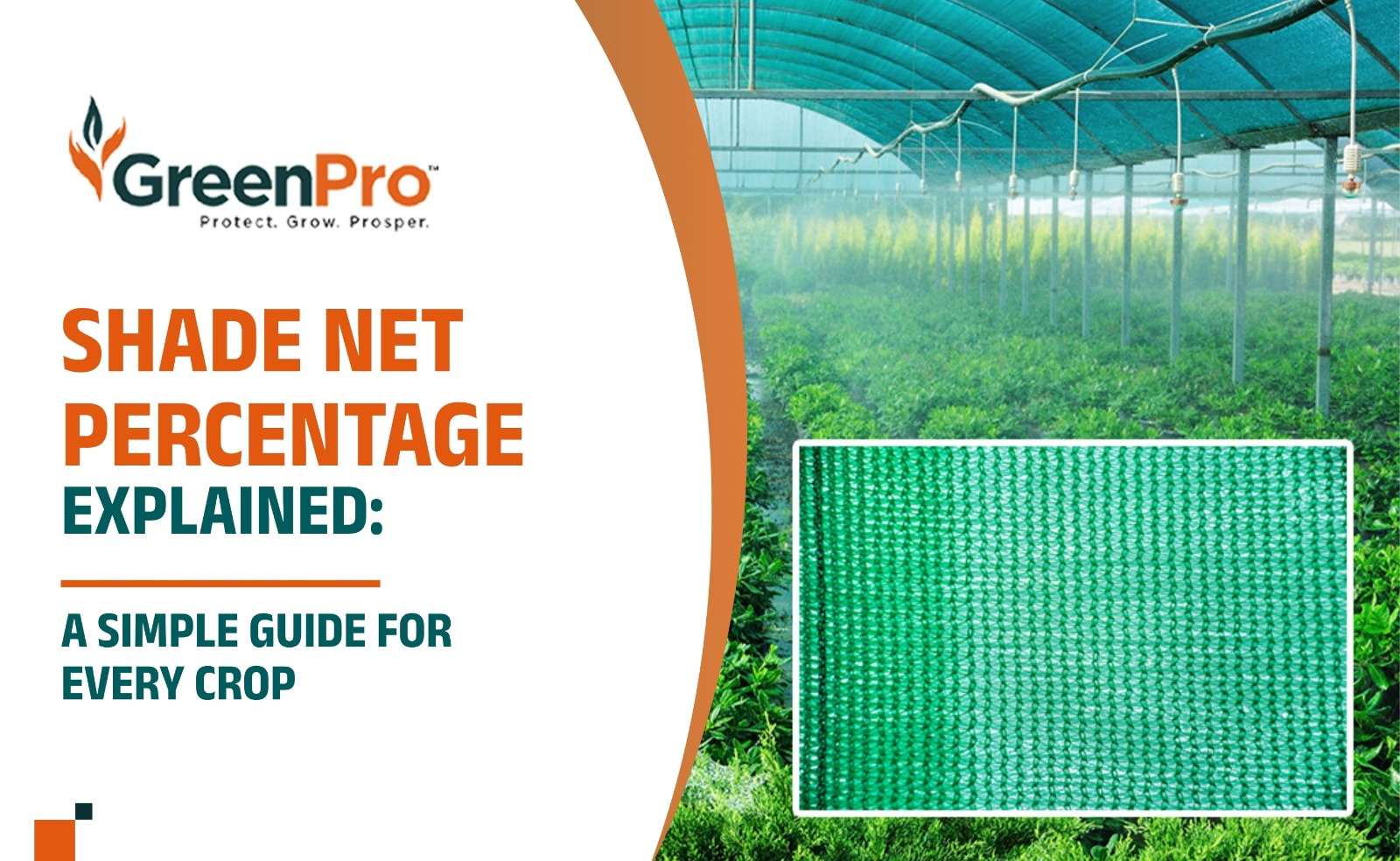
In modern agriculture, shade net farming has become an important solution for farmers facing challenges like extreme heat, unpredictable weather, and crop stress. Many farmers invest in shade nets but often struggle with one important question: what percentage of shade net is suitable for their crop?
Selecting the wrong shade percentage can directly affect plant growth. Too much shade reduces the amount of light available for photosynthesis. Too little shade can expose crops to excessive heat, moisture loss, and leaf stress. The right Shade Net helps create a more balanced growing environment where crops receive suitable light and protection. For farmers practicing Protected Cultivation, understanding shade percentage is an important step toward reducing crop losses, improving quality, and using farm resources more efficiently.
What Does Shade Net Percentage Actually Mean?
Shade percentage tells you how much incoming sunlight the net is designed to block.
For instance: 75% shade net blocks approximately 75% of incoming sunlight and allows around 25% to pass through to the crop below. Similarly, a 50% shade net blocks approximately half of the sunlight, while a 35% shade net provides lighter shading.
Think of it like choosing sunglasses for your crop. Some plants need only mild protection from strong sunlight. Others need much more protection during hot and bright conditions.
However, shade percentage should not be selected in isolation. Crop type, season, location, sunlight intensity, plant age, and growing structure all matter.
Why the Right Shade Percentage Improves Crop Growth
Every crop has a different light requirement. Too much direct sunlight can increase leaf temperature, accelerate moisture loss, and cause scorching in sensitive plants. On the other hand, excessive shading can limit photosynthesis and result in weak, stretched, or pale growth.
A properly selected shade net helps reduce excessive heat and creates a more comfortable environment around the crop. It can also reduce evaporation and wind speed inside the structure. GreenPro shade nets are designed to support ventilation while helping reduce heat buildup and soil moisture loss.
The result can be healthier plants, better establishment, and more consistent crop growth.
Understanding Different Shade Net Percentages 
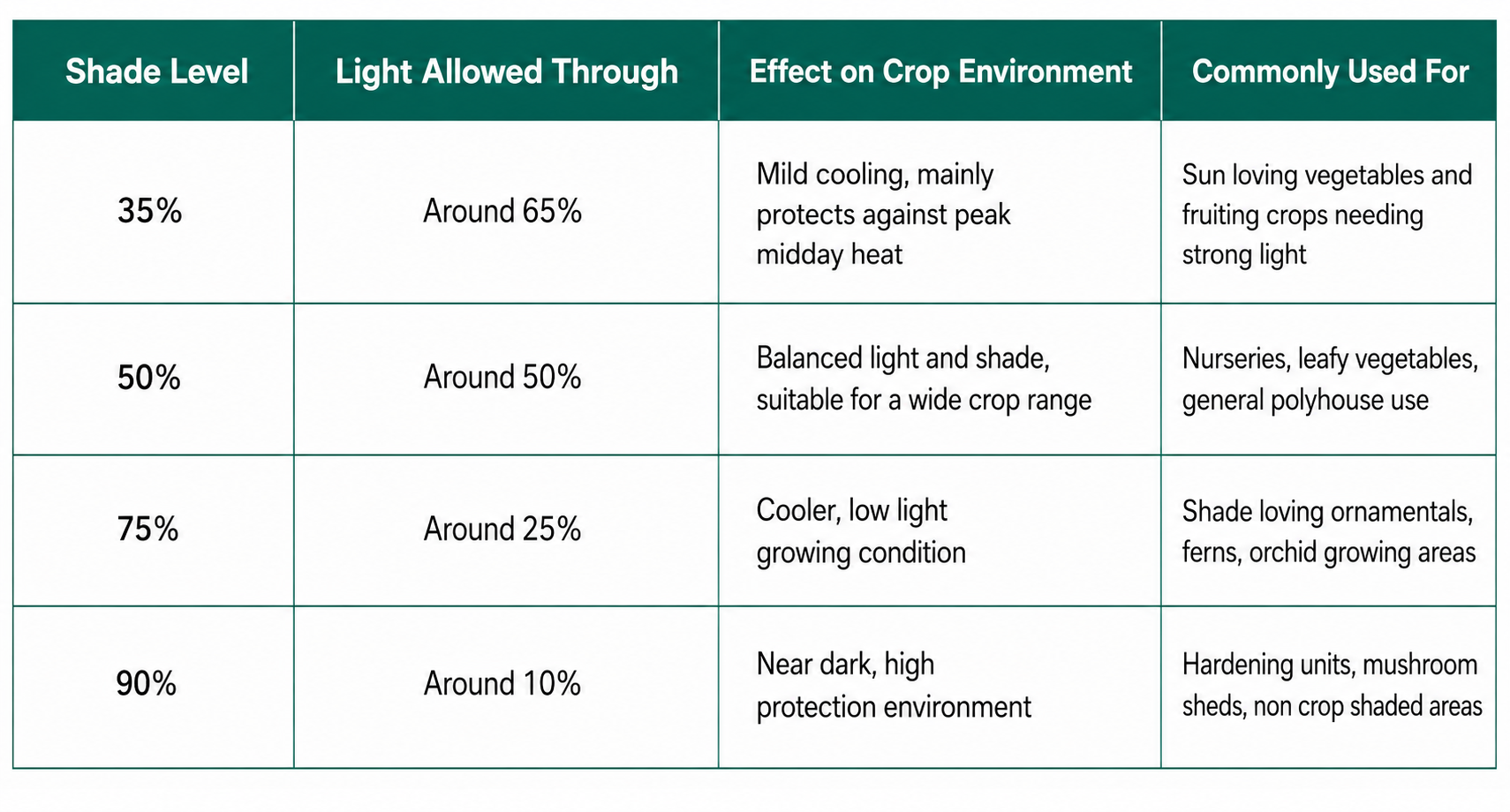
The figures above should be treated as a practical starting point rather than a universal prescription. The actual light environment also depends on the net construction, colour, installation, season, and surrounding conditions.
Which Shade Net Percentage Is Best for Vegetable Farming?
There is no single shade percentage that is ideal for every vegetable crop in India.
For many vegetable applications, 35% to 50% shade can provide a useful balance between sunlight and protection. However, the final choice should be adjusted according to crop requirements and local weather.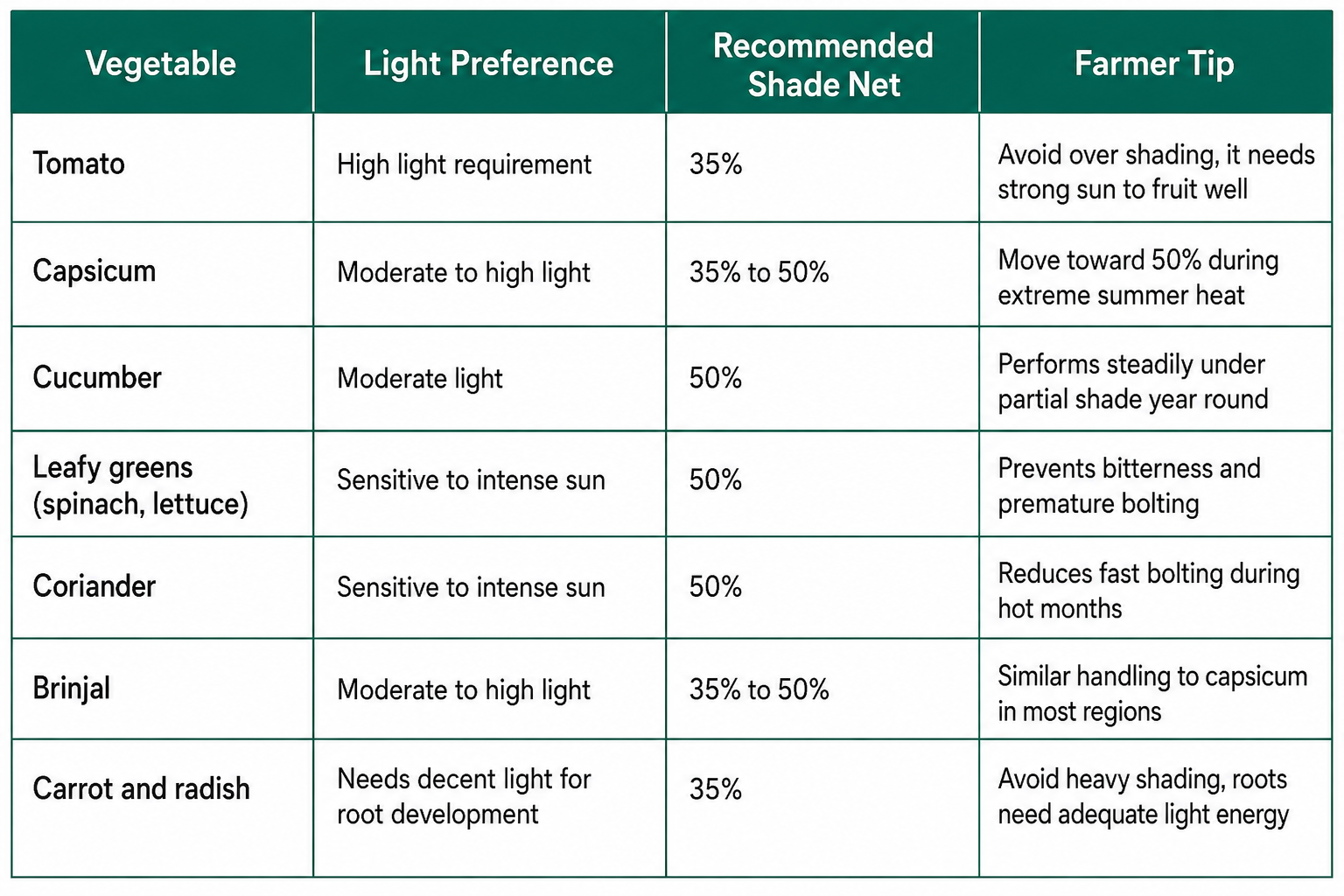 These ranges are not fixed rules. A vegetable grown during a mild winter may need less shading than the same crop grown during peak summer.
Does Shade Net Colour Matter?
Yes. Shade net colour can influence the quality and distribution of light reaching the crop.
Shade nets may be available in colours such as black, green, white, red, pearl, and other multi-colour options. Different colours interact with sunlight differently and can modify the light spectrum and diffusion around the plants.
Black nets primarily reduce incoming light intensity. Green nets are widely used for general agricultural and nursery applications. White or pearl-type materials can provide greater light diffusion in suitable applications. Red coloured nets can alter the light spectrum reaching plants and may be selected for specific crop management objectives.
The colour should therefore be selected based on the crop and intended growing environment rather than appearance alone. GreenPro offers shade cloth in multiple colours and fabric constructions for different agricultural requirements.
Material Quality Matters as Much as Shade Percentage
A shade percentage tells you about light reduction, but it does not tell you everything about product quality.
Good quality shade nets are commonly manufactured from High Density Polyethylene or HDPE. The material should have adequate strength and be suitable for outdoor agricultural conditions.
GSM, or grams per square metre, is another useful specification. In simple terms, GSM indicates the weight of the fabric per square metre. Depending on construction and application, a higher GSM can indicate a heavier and potentially more robust fabric, but GSM alone should not be used to judge overall quality.
UV stabilization is especially important in Indian conditions. Continuous exposure to sunlight can weaken untreated polymer materials. A UV stabilized shade net is designed to withstand prolonged outdoor exposure while maintaining its structure and shading performance.
GreenPro shade nets are designed with UV resistance and durable fabric construction for agricultural applications.
Common Mistakes Farmers Make While Selecting Shade Nets
- Choosing based on price alone: A cheaper net may not provide the durability or protection required for long-term use.
- Choosing excessive shading: More shade does not automatically mean better crop protection. Too little light can reduce photosynthesis and weaken plant development.
- Ignoring regional climate: A shade percentage suitable for a cooler region may not provide enough protection during peak summer in a hot area.
- Reusing degraded nets: Prolonged sunlight exposure can affect material strength and performance, particularly when the net is not adequately UV stabilized.
- Ignoring early crop response: Pale and stretched growth may indicate insufficient light, while scorched or curled leaves can indicate excessive heat or inadequate protection.
How Shade Net Farming Saves Money in the Long Run
A well-selected agricultural shade net can reduce several recurring farm problems.
It can lower moisture loss by reducing direct solar exposure. These nets help reduce heat-related crop damage. It can improve plant survival during difficult weather conditions. They also reduce the need for repeated replanting when young plants are protected properly.
For nurseries and commercial farms, these benefits can translate into better use of water, labour, growing space, and inputs.
The long-term value comes from matching the right net with the right crop rather than simply selecting the highest shade percentage.
Long-Term Benefits of Using the Right Shade Net
The right shade net supports more than immediate crop protection. It can help farmers create a more predictable growing environment across different seasons.
Farmers can benefit from:
- Reduced crop stress
- Better plant establishment
- More efficient water use
- Improved crop quality
- Lower risk from intense sunlight
- Better use of protected cultivation structures
- Longer service life when quality and installation are appropriate
As climate conditions become less predictable, shade net farming gives growers greater control over one of the most important factors affecting crop performance: light intensity.
Choose the Right Partner for Your Shade Net Needs
Selecting the right shade net percentage should never be based on one number alone. Crop requirement, climate, season, colour, material, GSM, UV stabilization, and installation all influence performance.
GreenPro Ventures offers shade net solutions designed for agricultural and protected cultivation applications, with different shading levels, colours, and fabric constructions.
Whether you are a farmer planning your next crop, a dealer looking for dependable products, or a distributor seeking reliable agricultural solutions, choosing the right Shade Net Manufacturer can make a meaningful difference.
The goal is simple. Give every crop the amount of light and protection it needs to grow better, while making your farm investment work for the long term.[/vc_column_text][/vc_column][/vc_row]
Most vegetables grow well under 35 to 50% shade nets. Tomatoes and chillies prefer lighter shading around 35%, while cucumber and leafy greens do better under 50% for balanced light and heat protection.
No single percentage suits every crop. Sun-loving vegetables need lighter shade, while ornamental and shade-loving plants like orchids need much higher percentages, often 75% or more, to grow properly.
Not always. Too much shading can reduce sunlight below what a crop needs, leading to weak stems and poor flowering. The goal is matching shade level to the crop, not simply choosing the highest available percentage.
Shade nets reduce water evaporation, protect crops from heat damage and extend the growing season. This lowers watering and replanting costs while improving harvest consistency, giving farmers better returns over time.
Shade nets gradually lose effectiveness due to sun exposure, often dropping several percentage points after a few years. Choosing UV stabilised nets from a reliable manufacturer helps maintain proper shading for a longer period.