
Protected Cultivation in India: Technologies Every Modern Farmer Should Know
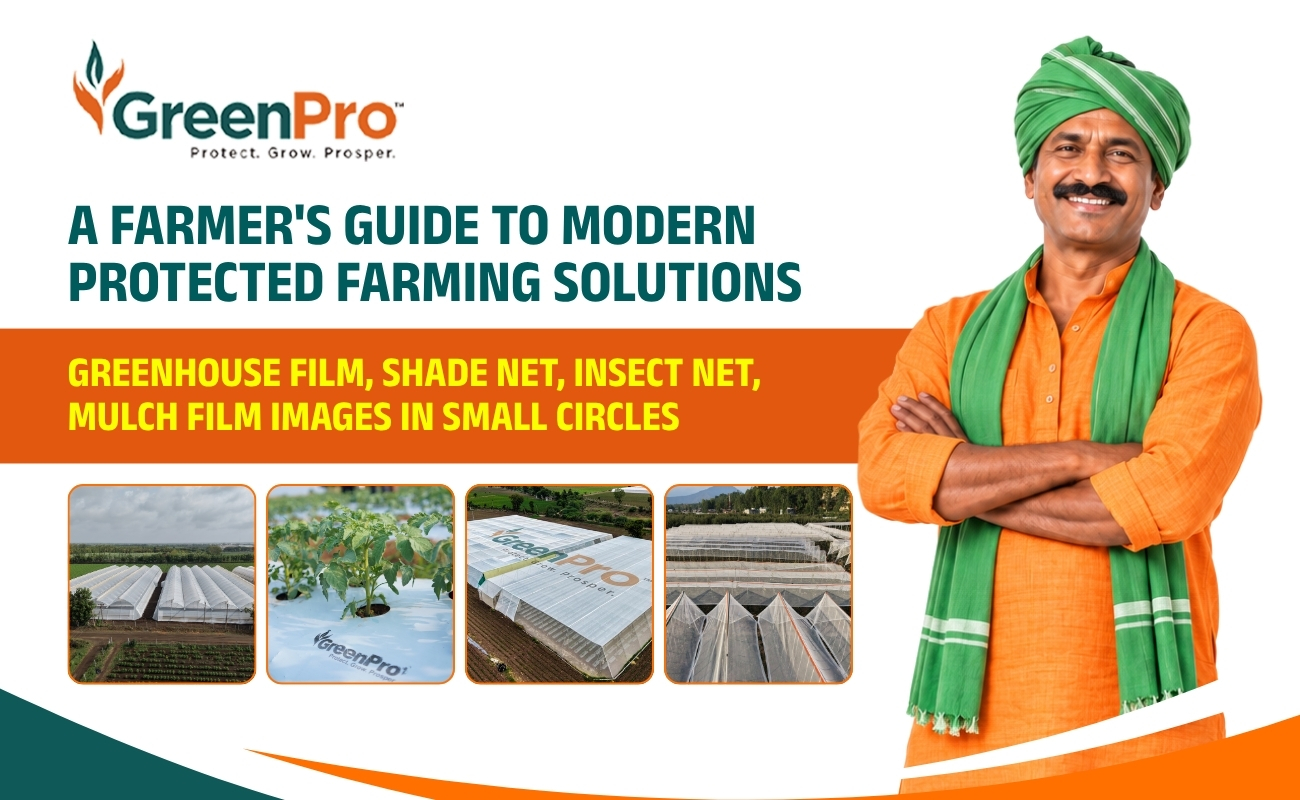
Protected cultivation is changing how Indian farmers are approaching high-value agriculture. Instead of leaving crops fully exposed to harsh heat waves, heavy monsoons, troublesome pest attacks, and strong winds, protected farming establishes a controlled microclimate. For vegetables, fruits, flowers, and nurseries, this stability translates directly into better quality, more consistent yields, and more reliable market returns.
Yet modern protected farming goes well beyond building a basic greenhouse. The system’s real success lies in selecting the right specialised films, nets, and coverings suited to the crop, local weather conditions, and soil needs.
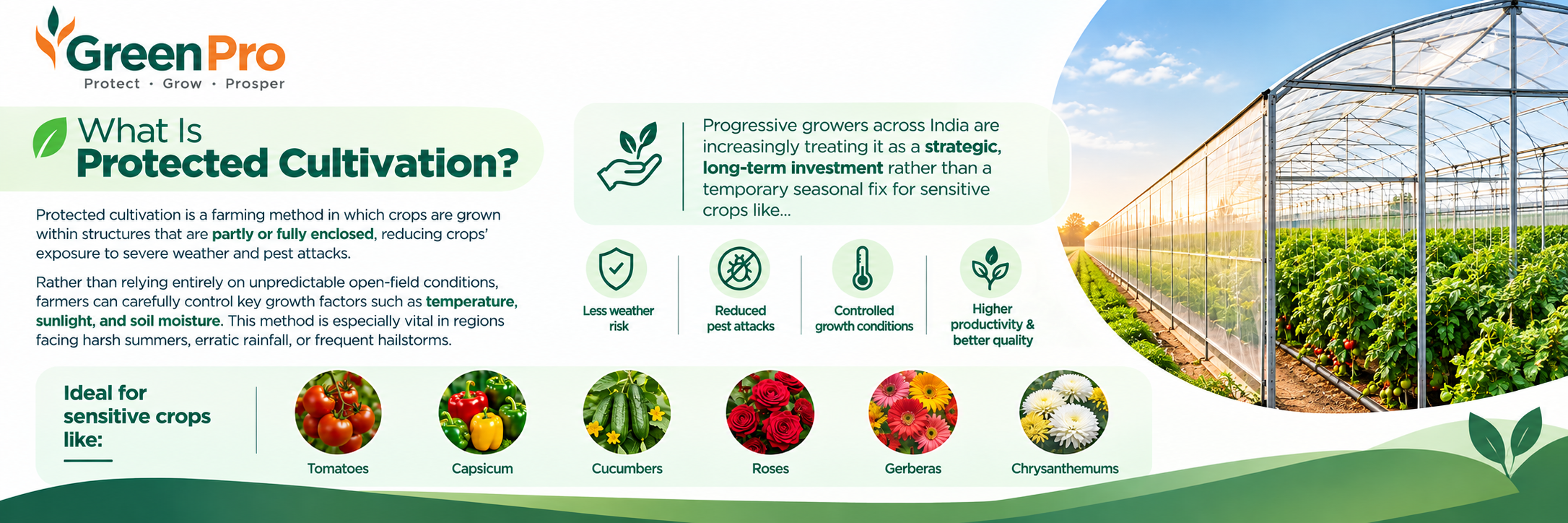
What Is Protected Cultivation?
Core Technologies Shaping Modern Protected Cultivation
- Greenhouse Films: How to Control the Microclimate
Greenhouse cover does more than keep rain out; it also regulates the internal environment. Modern agricultural engineering focuses on light transmission, thermal retention, and condensation control.
- The Science of Polyfilms: High-grade solutions like GreenPro’s 7-layer high-performance polyfilms come with a 42-month warranty, giving farmers the durability needed to run additional, profitable crop cycles.
- Diffusion and heat management: The films manage heat stress by scattering sunlight evenly across the crop canopy for even growth while absorbing NIR (Near-Infrared) rays to maintain balanced temperatures.
- Engineering tailored to each crop: Since different plants have specific requirements for light and warmth, modern polyfilms are designed for each crop type to maximise productivity.
- Shade Nets: Finding a Balance Between Light and Temperature
During India’s hot summer, too much solar radiation can cause serious physiological stress in plants, which in turn inhibits growth and lowers yields.
- Shade nets reduce the intensity of sunlight reaching plants, providing a comfortable, stress-free environment essential for delicate crops and young seedlings.
- The Golden Rule states that the appropriate shade level must be based on the crop type, season, and geographical location; its aim is not to provide maximum shading but to achieve the right balance that protects the plant without depriving it of the light needed for photosynthesis.
- Insect Nets: The Initial Stage of Defence in Integrated Pest Management
Insect vectors cause devastating plant diseases by transmitting viruses and bacteria and also cause direct physical damage to leaves, flowers, and fruit.
- By installing a high-quality insect net, you create an impermeable mechanical barrier that greatly reduces pest entry, supports Integrated Pest Management (IPM), and reduces the need for chemical pesticides.
- Regarding durability and ventilation: premium nets, such as those in GreenPro’s range, last more than five years and keep pests out while ensuring proper ventilation.
- When it comes to mesh customisation, choose the right mesh size, since pest sizes differ by region and crop type, to achieve the best airflow while strictly excluding insects and keeping the crop in good condition.
- Mulch Films: Realising the potential of the root zone
Crop protection extends well below the soil surface. By covering the soil around the plants with mulch film, weeds are suppressed, moisture evaporation is reduced, and root temperatures are stabilised.
- The film has an advanced 7-layer structure: multi-layer mulch films such as GreenPro’s range, made from virgin material, block light and suffocate weeds while greatly reducing the need for weedicide and manual labour.
- Improving root health and enabling easy cleaning: By helping to keep the soil temperature stable, these films promote the growth of strong white roots. Additionally, because they are made from pure virgin polymers, they do not tear during installation and can be pulled out and cleaned from the soil at the end of the crop cycle, preparing the field for the next crop rotation.
- Anti-hail Nets: Full protection against unpredictable weather
A severe hailstorm can destroy a thriving crop of fruits, flowers, or vegetables in just a few minutes, wiping out months of hard work. Thanks to their heavy-duty Leno technology, special Leno anti-hail nets provide the highest level of protection in areas prone to heavy snowfall and sudden hailstorms, including hilly regions and fruit-growing zones.
For long-term security, these nets are supported by strong woven or knitted frameworks and generally backed by a five-year warranty, protecting high-value orchards (for example, those growing apples, grapes, and vegetables) against hail damage, as well as birds and larger pests.
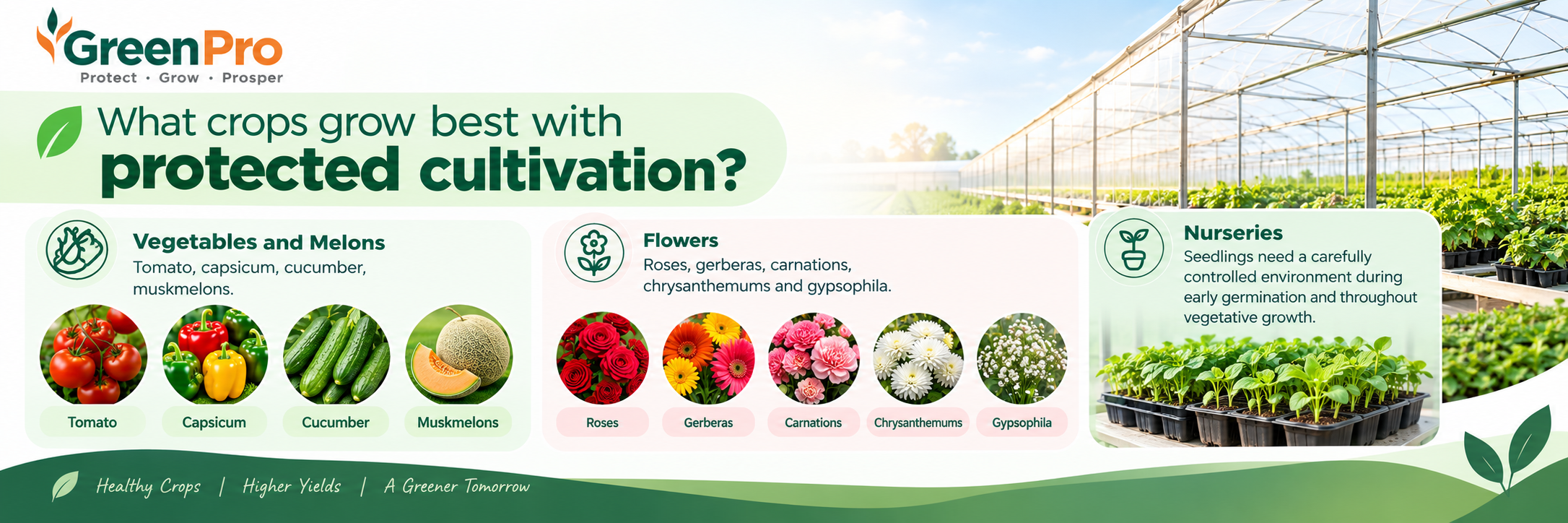
What crops grow best with protected cultivation?
It is standard practice to protect high-value horticultural crops because quality fetches a market premium. Among the most important examples are:
 There is no one-size-fits-all protected cultivation package, since different crops have their own biological tolerances and farm design should be based on the specific requirements of the crops and local climate conditions.
How does protected farming benefit farmers financially?
The financial advantages of protected agriculture go beyond higher yields; they also include reduced risk and more efficient resource use. Farmers can achieve much higher water productivity and better fertiliser efficiency because they buffer crops against unexpected weather and reduce pest pressure. Studies on protected vegetable production in India show a clear route to higher yields and excellent produce quality.
Ultimately, returns depend on a combination of the crops chosen, the type of structure used, the geographical location, the level of investment, management skill, and market access. The main aim of the contemporary farmer should be steady, reliable production rather than simply pursuing high yields.
Why an Integrated Approach Makes Sense?
A single technology cannot solve every challenge a farm faces:
- The greenhouse film controls the atmosphere above.
- A shade net blocks harsh light and heat.
- An insect net keeps physical pests out.
- Mulch film optimises the root zone.
- An anti-hail net protects against severe weather.
Together, these measures form a multi-layered approach to combating environmental stress. GreenPro Ventures offers all of these films, nets and agricultural fabrics as part of a single, unified portfolio, which includes greenhouse films, mulch films, insect nets, hail nets, shade nets and ground covers, thus making it easier for you to choose the products and design a complete and harmonious cultivation strategy.
Build Your Protected Cultivation Setup With GreenPro Ventures
Selecting the correct type of greenhouse film, shade net, insect net, anti-hail net, and mulch film can make a fundamental difference to the way your farm performs from season to season. Drawing on years of experience in material science and manufacturing, GreenPro Ventures helps growers, dealers, and distributors set up reliable, high-quality protected cultivation systems suited to Indian conditions.
Contact GreenPro Ventures now to discover which products are most appropriate for your farm and begin your journey towards safer and more profitable cultivation.
FAQ
Protected cultivation is an advanced form of farming in which crops are grown in controlled or semi-controlled structures such as greenhouses or net houses, enabling farmers to regulate weather, pest infestations, and soil conditions to produce healthier plants and ensure consistent yields from season to season.
A full setup uses a variety of specialised materials, such as multi-layer greenhouse polyfilms, shade nets suited to the local climate, insect-exclusion nets, films used as mulch in the root zone, and heavy-duty Leno anti-hail nets.
High-value vegetables such as tomatoes, capsicums, and cucumbers, along with strawberries and top-grade cut flowers like roses and gerberas, grow well in protected systems because of stable temperatures, optimised light, and reduced pest interference.
Certainly, it improves resource efficiency, crop quality, and market consistency. Yet overall profitability depends heavily on the crop chosen, the size of the initial investment, management expertise, the local climate, and current market prices.
Certainly, protected measures such as shade nets, insect barriers, and mulch films require only a small amount of initial capital, making them highly accessible and affordable risk-management options for small and medium-sized farmers.