
5 Benefits of an Hdpe Pond Liner for Sustainable Agriculture
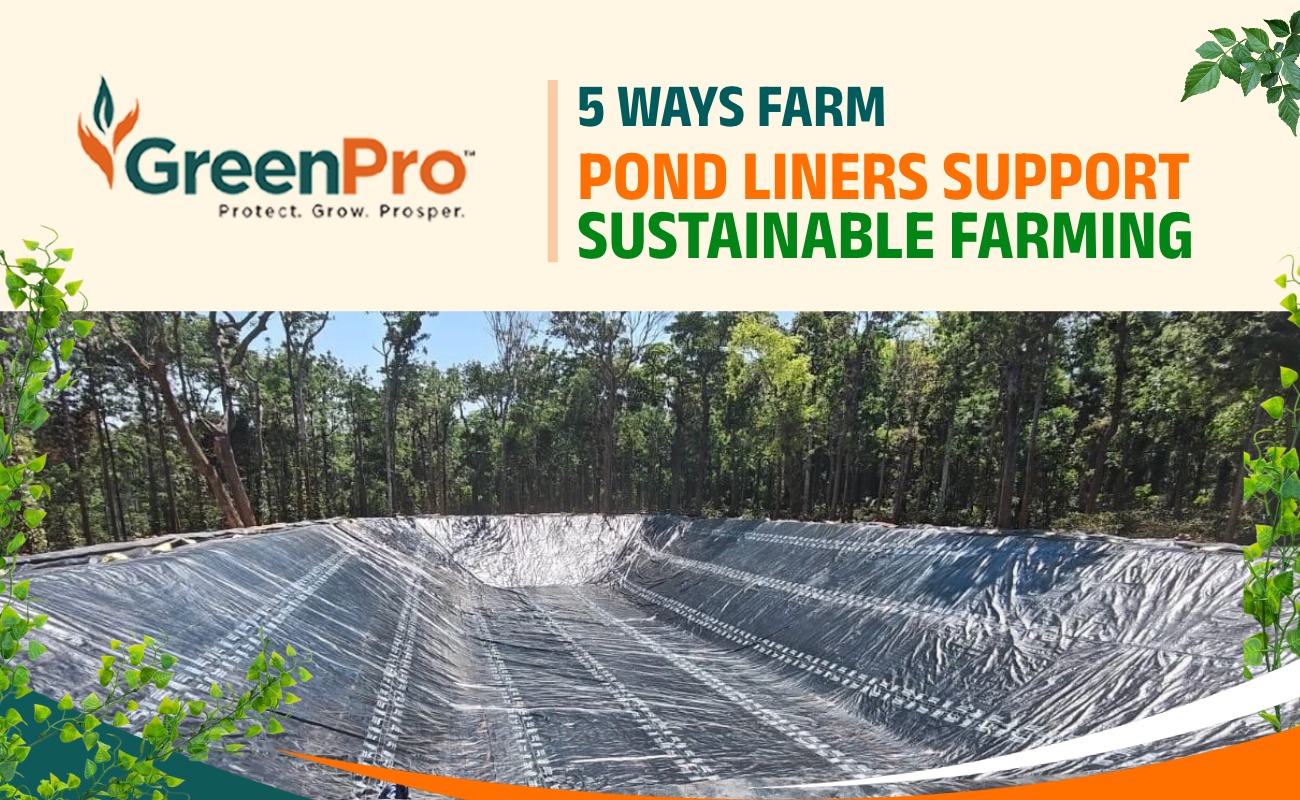
The amount of crops a farmer can grow after the monsoon has finished depends on the rain. A farm pond stores this rain, but because the soil walls are bare, a large amount of it seeps away within a few weeks. Use an HDPE pond liner to seal the pond bottom and hold the water you collect. Experience working with farmers across India shows that a lined pond affects how a farm plans its whole year.
What does a farm pond liner do?
A farm pond liner is a flexible plastic sheet that covers the floor and walls of a dug pond. It creates a waterproof barrier between stored water and the soil. Pond liners range from 300 to 1000 microns in thickness, so you can match the sheet to the size and depth of your pond.
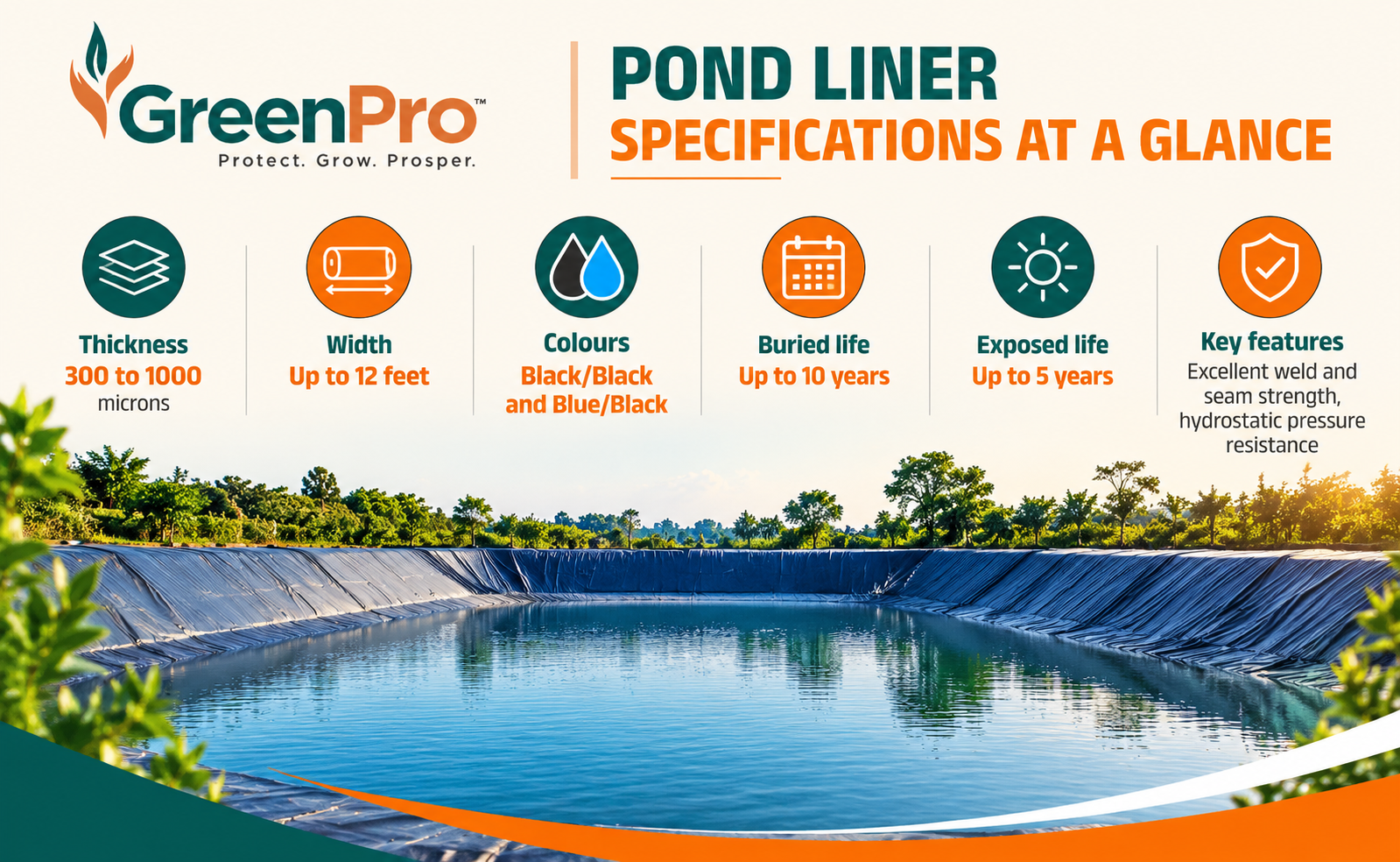
Buried life applies when a layer of soil covers the liner and shields it from sunlight. Exposed life applies when the sheet stays open to the sun.
Far less water lost to seepage
Unlined ponds in sandy or rocky ground can lose a large share of their water into the soil before the crop ever needs it. A liner, however, stops that loss. As a result, farmers can store monsoon rainwater and use it for the rabi season instead of watching the pond level drop week after week.
Seams, though, are where many liners start to leak. That is why we focus on excellent weld and seam strength, so the joints stay as watertight as the sheet itself.
Did you know? According to a report by ETV Bharat in June 2026, a farmer in the Aravalli district of Gujarat has been using rainwater that he has stored to irrigate nearly 50 bighas in a one-acre pond over a period of five years by lining the pond with thick plastic.
Reliable irrigation through dry months
Above all, stored water lets you control the timing of irrigation. In places such as Saurashtra and Kutch, where rainfall is irregular, a lined pond can help a farm survive a long dry spell. Moreover, if you combine it with drip irrigation, the same pond can water a much larger area.
Cleaner water and stable pond banks
In an unlined pond, the soil walls gradually give way and slide into the water. The silt then clouds the water, blocks drip filters and reduces storage space every season. A liner, on the other hand, keeps the banks in shape, so you spend less time and money on desilting. In addition, our liners resist hydrostatic pressure, which is the steady push of water against the pond floor and walls. Therefore, they hold firm even when a deep pond is full to the brim.
An HDPE Pond liner lowers long-term costs
Concrete and brick lining cost more and take longer to build. By comparison, you can install a plastic liner within days. Furthermore, a UV-stabilised sheet lasts up to 5 years in direct sun and up to 10 years when buried under soil. Because the pond holds water longer, you also run the borewell pump less, which saves diesel or electricity.
Flexible storage for any farm size
Sheets come in widths of up to 12 feet, and installers can weld them together to fit almost any pond shape, from a small kitchen garden tank to a pond covering a full acre. Some farmers also use the same pond to store surplus borewell water along with rainwater. For more on choosing a durable sheet, read our guide on long-lasting liners for farm ponds.
HDPE or LDPE: which one suits your pond?
| Feature | HDPE | LDPE |
| Stiffness | Firmer, holds shape on large surfaces | Softer, folds easily |
| Sun and puncture resistance | Higher | Moderate |
| Best for | Large, open farm ponds | Small or irregular ponds |
| Joints | Usually welded on site | Easier to fit around corners |
In short, an LDPE pond liner is a sensible pick for smaller ponds with tight corners. For bigger ponds exposed to strong sun, however, HDPE usually lasts longer.
Where else are pond liners used?
The same liner that saves water on a farm also protects land and water in much larger projects. In our experience, pond liners are widely used in:
- Aquaculture, fish farming and spirulina cultivation
- Canals, dams and reservoirs
- Evaporation ponds
- Sewage treatment plants
- Landfills and rig pads
- Road works and runways
- Secondary containment systems
Each of these projects depends on seams that hold and a sheet that stands up to water pressure for years.
How do you make a pond liner last longer?
Quick tips from our field teams:
- Clear stones, roots and sharp objects from the pit before laying the sheet.
- On rocky ground, place a protective cushion layer under the liner. Our geomembrane sheets work well for this.
- Anchor the top edges in a trench dug along the bank.
- Keep cattle and tractors away from exposed edges.
- Desilt with plastic or wooden tools, never metal spades.
Build your farm pond with GreenPro Ventures
GreenPro Ventures manufactures pond liners for Indian farms and helps growers pick the right thickness and size for their soil and climate. Share your pond dimensions with our team, and we’ll recommend the right fit for your farm and budget.
FAQ
An HDPE pond liner is a thick polyethylene sheet laid inside a dug farm pond. It prevents stored water from seeping into the soil, keeping rainwater and borewell water available for irrigation during the dry months.
Pond liners range from 300 to 1000 microns. Thinner sheets suit small, shallow farm ponds, while large, deep or rocky ponds need thicker material. Soil type, pond depth and sun exposure should guide the final choice.
A UV stabilised HDPE liner lasts up to 5 years when exposed to direct sun and up to 10 years when buried under soil. Careful installation, a cushion layer on rocky ground and keeping cattle off the edges all help.
HDPE should be selected when using large ponds in open sunlight since it offers better resistance to punctures and UV radiation; LDPE, on the other hand, is softer and more likely to fold, making it suitable for small ponds with tight corners and irregular shapes.
Certainly, through its various schemes, the state of Gujarat supports fitting geomembranes in farm ponds, known as khet talavdi. Since scheme terms change frequently, it’s best to check with your local agriculture or water resources office for current eligibility and required documents.