
How Long Does Greenhouse Film Last? 7 Signs It’s Time to Replace It
As the most widely used cladding material for greenhouse structures in India, greenhouse film plays an important role in protected cultivation. It helps manage sunlight, temperature, and moisture while creating a suitable growing environment for crops. But even high-quality greenhouse film does not last forever.
Over time, continuous exposure to sunlight, heat, wind, dust, and agricultural chemicals can gradually affect its performance. For polyhouse growers, identifying the early signs of ageing is important. A greenhouse cover may still look usable from a distance, even when its strength, flexibility, or light transmission has started to decline.
Understanding how long greenhouse film lasts and when it should be replaced can help farmers maintain crop quality, avoid unexpected damage, and plan replacement at the right time.
How Long Does Greenhouse Film Last in Indian Conditions?
In Indian conditions, a high-quality UV-stabilised greenhouse film can typically last around 3 to 5 years, depending on its quality, thickness, UV protection, installation, maintenance, and environmental exposure.
India’s intense sunlight, high summer temperatures, strong winds, and varying climatic conditions can accelerate the ageing of greenhouse plastic. That is why there is no single answer to the question: how long does greenhouse plastic last? The quality of raw materials, UV stabilisers, and film manufacturing technology also plays an important role in determining its service life.
Typical Lifespan of Greenhouse Films
| Greenhouse Film Type | Typical Lifespan | Suitable Applications |
| Non-UV-stabilised film | Often less than 1 year | Temporary covers and short-term applications |
| UV-stabilised single-layer film | Approximately 2–3 years | Budget polyhouses and protected cultivation |
| UV-stabilised multilayer film (5 or 7 layers) | Approximately 3–5 years | Commercial polyhouses, vegetables, flowers, and high-value crops |
These are indicative greenhouse film lifespan ranges. Actual performance varies with film formulation, local conditions, installation, and maintenance.
For growers investing in long-term protected cultivation, choosing a high-quality multilayer greenhouse film with appropriate UV protection is essential. GreenPro Ventures manufactures advanced 7-layer greenhouse films, with a 42-month warranty available on selected products, designed to support reliable performance in demanding growing conditions.
What Factors Reduce the Lifespan of Greenhouse Film?
Several environmental and operational factors can shorten polyhouse film life and cause the film to deteriorate earlier than expected.
- Continuous UV Exposure
Ultraviolet radiation is one of the major causes of polyethylene degradation. Over time, UV exposure can affect the molecular structure of the plastic, reducing its flexibility and mechanical strength. High-quality UV stabilisers help slow this process and protect the film against prolonged sunlight exposure.
- High Temperatures
Greenhouse structures can become extremely hot during summer. Metal pipes exposed to direct sunlight may develop high surface temperatures, which can accelerate deterioration where the film touches the structure. Proper installation and protective materials at contact points can help minimise damage.
- Agricultural Chemical Exposure
Certain sulphur- and chlorine-containing agricultural chemicals can interfere with the UV stabilisers used in greenhouse films. Frequent or excessive exposure may accelerate film ageing and reduce durability. Following the manufacturer’s chemical-exposure recommendations is important for maintaining film performance.
- Improper Installation
Incorrect installation can significantly affect greenhouse film life. Excessive stretching creates unnecessary stress, while loose installation allows the film to move repeatedly against the structure during strong winds. Both conditions can contribute to premature tearing.
- Dust and Poor Maintenance
Dust and dirt accumulation reduce the amount of sunlight passing through the greenhouse cover. Regular cleaning and timely repairs help maintain light transmission and prevent minor problems from becoming major damage.
Did You Know?
Greenhouse film often experiences greater stress at frame-contact points than across the open roof. Heat, friction, and repeated movement near pipes, clamps, and fastening systems can cause localised deterioration, even when the surrounding film remains in good condition.
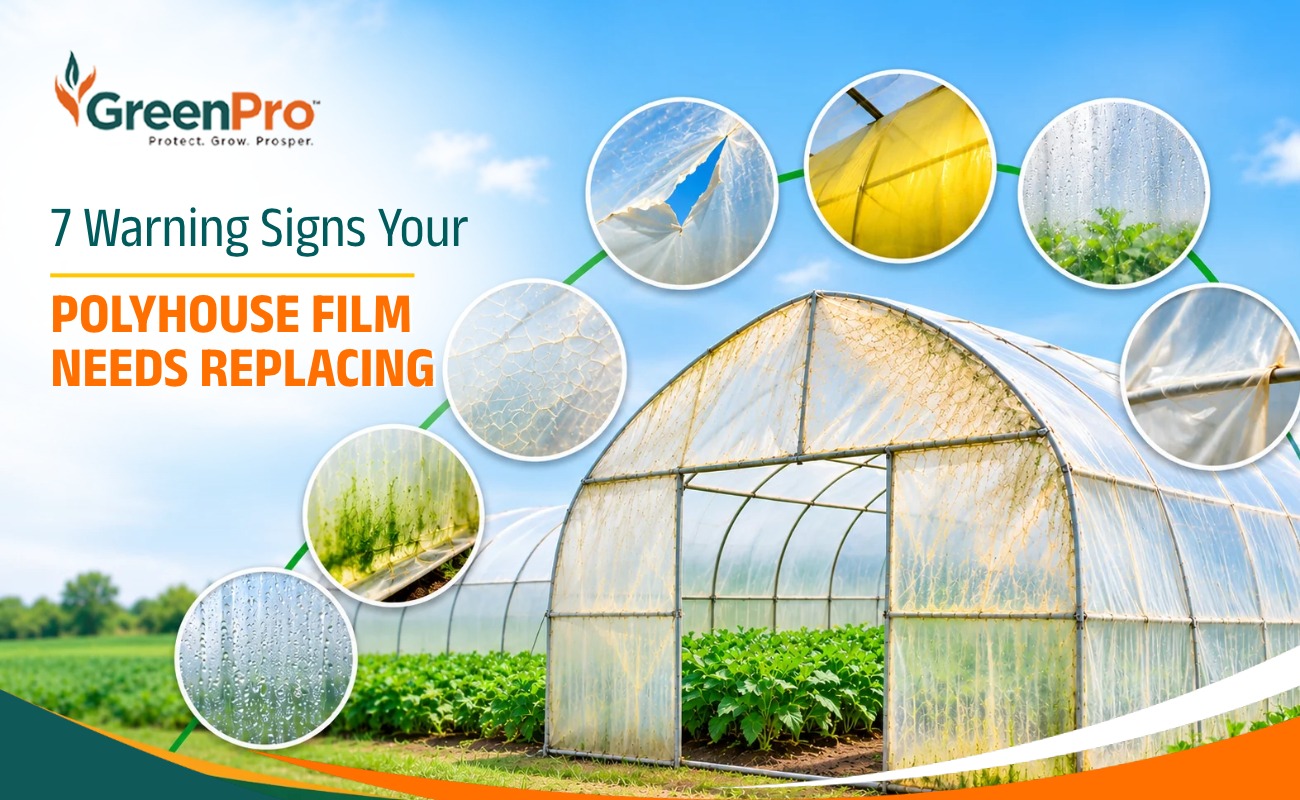
7 Signs It’s Time to Replace Your Greenhouse Film
Greenhouse film does not usually fail overnight. Its performance may gradually change over several growing seasons. Here are seven important warning signs that every polyhouse grower should monitor.
Noticeable Yellowing or Cloudiness
One of the most visible signs of greenhouse film ageing is a change in its appearance. Over time, the film may develop a slightly yellowish appearance due to ageing, environmental exposure, or accumulated surface deposits. However, slight yellowing does not necessarily mean the film has deteriorated or needs replacement.
Certain greenhouse films may also have a naturally different appearance because of their specialised optical properties. The important factor is whether the film continues to maintain the required light transmission and performance. If yellowing becomes significant, cloudy patches increase, or the film begins losing transparency along with mechanical strength, it may be time for a closer inspection.
Film Becomes Brittle and Loses Flexibility
A good greenhouse film should maintain adequate flexibility and mechanical strength under normal operating conditions. As the film ages, it may gradually become stiff or brittle. Cracking around fastening points, reduced flexibility, and tears that spread easily can indicate deterioration. If the film has become noticeably brittle, replacement may be necessary to prevent unexpected failure.
Frequent Tears and Repeated Damage
A small accidental puncture does not always require replacing the entire greenhouse cover. Minor damage can often be repaired using suitable greenhouse film repair tape. However, if tears repeatedly develop around pipes, gutters, clamps, or roof edges, the film may be losing its mechanical strength. Repeated tearing across different sections is a strong indication that the overall condition of the film should be evaluated.
Reduced Light Transmission
Sunlight is essential for photosynthesis, flowering, fruit development, and overall crop productivity. A high-quality greenhouse film is designed to transmit the light required for crop growth while providing additional properties depending on its formulation.
Over time, surface dirt, ageing, and material deterioration may reduce light transmission. This can influence crop growth, particularly during periods of limited natural sunlight. Growers may notice slower plant development, delayed flowering, or reduced growth uniformity. However, these symptoms can also result from other factors, including temperature, nutrition, irrigation, and pest pressure. Before deciding to replace a greenhouse film, it is advisable to evaluate its light transmission and overall condition.
Excessive Water Droplets Inside the Greenhouse
Many advanced greenhouse films include anti-drip technology to help manage condensation. Instead of forming large droplets that fall directly onto the crop, an effective anti-drip surface encourages moisture to spread into a thin layer and flow towards the sides of the structure. Over time, the effectiveness of anti-drip additives may decrease.
When this happens, growers may notice increased water droplets on the inner surface of the film. Excessive dripping can increase leaf wetness and create favourable conditions for certain crop diseases. However, greenhouse humidity, ventilation, temperature, and roof slope also affect condensation. These factors should be checked before attributing the problem to film ageing.
- Persistent Dirt and Surface Deterioration
Greenhouse films are continuously exposed to dust, dirt, and environmental contaminants. While regular cleaning can help maintain light transmission, some surface deposits may become difficult to remove. If the film remains cloudy or heavily stained even after appropriate cleaning, its condition should be inspected. Persistent surface deterioration, especially when combined with reduced light transmission or brittleness, may indicate that replacement is necessary.
- Changes in Crop Growth and Performance
Sometimes, changes in crop performance encourage growers to inspect their greenhouse covering. Reduced plant vigour, uneven growth, delayed fruit development, and increased moisture-related problems can indicate that the growing environment needs attention.
These symptoms do not necessarily mean the greenhouse film is failing. However, when irrigation, nutrition, pest management, and other environmental factors are properly managed, the film’s condition should also be evaluated. A greenhouse cover that no longer provides the required light and moisture-management performance may affect the overall growing environment.
Important: Replacement decisions should be based on the film’s actual condition and performance. Significant brittleness, repeated tearing, or substantial loss of light transmission may justify replacement even if other warning signs are absent.
How to Extend the Lifespan of Your Greenhouse Film
Proper care and maintenance can make a significant difference in the durability of greenhouse plastic film.
Here are some practical steps growers can follow:
- Protect frame-contact points: Use suitable protective materials between the film and metal structure to reduce heat-related stress and friction.
- Install the film correctly: Follow recommended installation practices and avoid excessive stretching or loose fastening.
- Clean the film regularly: Remove accumulated dust using manufacturer-approved cleaning methods to maintain light transmission.
- Follow chemical-exposure guidelines: Avoid excessive exposure to chemicals that may affect UV stabilisers.
- Repair small holes promptly: Use compatible greenhouse film repair tape to prevent minor punctures from expanding.
- Inspect before each crop cycle: Check the film’s appearance, flexibility, fastening points, and overall condition before the next planting.
These simple practices can help growers maintain the effectiveness of their greenhouse covering and reduce the risk of premature damage.
Why Choose 7-Layer Greenhouse Film for Better Durability?
The durability and performance of greenhouse film depend on much more than its thickness. The quality of raw materials, polymer formulation, UV stabilisers, functional additives, and manufacturing technology all contribute to its performance. Advanced 7-layer co-extrusion technology allows different polymer layers to be engineered within a single greenhouse film. This multilayer construction helps manufacturers optimise various properties according to crop requirements and environmental conditions.
Key Advantages of Advanced 7-Layer Greenhouse Film
- UV Stabilisation: High-quality UV stabilisers help protect the polyethylene material against degradation caused by prolonged sunlight exposure, supporting its durability.
- Enhanced Mechanical Performance: Carefully selected polymer combinations and multilayer construction can provide improved strength, flexibility, and resistance to mechanical stress.
- Light Diffusion: Specialised light-diffusing formulations help distribute sunlight more uniformly throughout the crop canopy, supporting better light availability across the growing area.
- Anti-Drip Performance: Anti-drip additives help manage condensation by encouraging water to spread across the film surface instead of forming large droplets that may fall onto plants.
- Heat and Light Management: Depending on the film formulation, specialised additives can help manage solar radiation, light transmission, and heat entering the greenhouse.
- Optimised Additive Distribution: Multilayer manufacturing technology allows manufacturers to position different polymers and functional additives within the film structure to achieve specific performance requirements.
- Long-Term Performance: A properly engineered 7-layer structure, combined with quality raw materials and an effective UV-stabilisation system, can support consistent performance throughout the film’s intended service life.
These advantages depend on the specific formulation. Not every 7-layer greenhouse film offers the same functional properties.
GreenPro 7-Layer Greenhouse Films: Advanced Technology with a 42-Month Warranty
At GreenPro Ventures, we understand that greenhouse covering is an important investment for growers. A reliable greenhouse film should not only provide protection but also help create suitable growing conditions throughout its service life. GreenPro manufactures advanced 7-layer greenhouse films using multilayer manufacturing technology and carefully selected raw materials. Our greenhouse film range is designed to address different protected-cultivation requirements, including UV stabilisation, light diffusion, heat management, condensation control, and mechanical performance.
Why Choose GreenPro Greenhouse Films?
- Advanced 7-Layer Technology: Engineered multilayer construction for application-specific performance.
- 42-Month Warranty: Available on selected high-performance greenhouse films, subject to applicable warranty terms and conditions.
- High-Quality Raw Materials: Carefully selected polymers and functional additives for reliable performance.
- Advanced Light Management: Specialised film solutions designed to manage light transmission and diffusion.
- Crop-Specific Solutions: Greenhouse films for vegetables, flowers, and other high-value protected crops.
- Manufacturing and Quality Control: In-house manufacturing supported by quality-control processes.
Whether you are cultivating capsicum, tomatoes, cucumbers, roses, gerberas, or other commercial crops, selecting the right greenhouse film is important for maintaining a productive growing environment.
Final Thoughts: Replace Your Greenhouse Film at the Right Time
A greenhouse film may continue to cover a polyhouse even after its original performance has started to decline. That is why regular inspection is important. Changes in flexibility, repeated tearing, reduced light transmission, and deterioration in functional properties can all indicate that the film requires attention. The best way to decide when to replace greenhouse film is to inspect the cover before every new crop cycle and plan replacement when necessary.
Choosing a high-quality film, installing it correctly, and following recommended maintenance practices can help protect your greenhouse investment. For growers looking for advanced greenhouse covering solutions, GreenPro offers 7-layer UV-stabilised greenhouse films with a 42-month warranty on selected products, supported by manufacturing expertise and application-specific technology.
Invest in the right greenhouse film today for reliable protected cultivation tomorrow.
FAQ
A high-quality UV-stabilised greenhouse film can typically last around 3 to 5 years under suitable conditions. Its actual lifespan depends on film quality, UV protection, thickness, environmental exposure, installation, and maintenance.
Not necessarily. Slight yellowing or minor colour changes do not automatically mean the greenhouse film has failed. Some films may have a naturally different appearance due to specialised optical properties. Significant discolouration accompanied by reduced light transmission, brittleness, or cracking should be investigated.
Yes. If the film remains structurally sound and the main problem is accumulated dust, appropriate cleaning may help improve light transmission. However, cleaning cannot reverse material degradation or restore lost mechanical strength.
Certain agricultural chemicals, particularly sulphur- and chlorine-containing products, can affect UV stabilisers and accelerate greenhouse film degradation. Their impact depends on chemical concentration, exposure frequency, and the film’s formulation. Follow the manufacturer’s recommended chemical-exposure limits.
A well-engineered 7-layer greenhouse film can offer advantages through its multilayer construction and specialised additives. Depending on the formulation, these may include UV stabilisation, mechanical durability, light diffusion, anti-drip functionality, and heat management. Overall performance depends on raw material quality, manufacturing technology, and suitability for local growing conditions.
GreenPro high-performance 7-layer greenhouse films come with a 42-month warranty, subject to the specific product’s warranty terms and recommended installation and operating conditions.
Greenhouse film should be considered for replacement when it becomes significantly brittle, develops repeated tears, loses essential light-transmission performance, or shows other serious signs of deterioration. Inspecting the film before each crop cycle helps growers plan replacement at a convenient time.
Thickness influences mechanical properties, but it does not determine lifespan on its own. UV-stabilisation quality, polymer formulation, multilayer construction, installation, environmental exposure, and maintenance all contribute to greenhouse film durability.