
Why Polyfilm Is the Most Important Decision You’ll Make on a Flower Farm
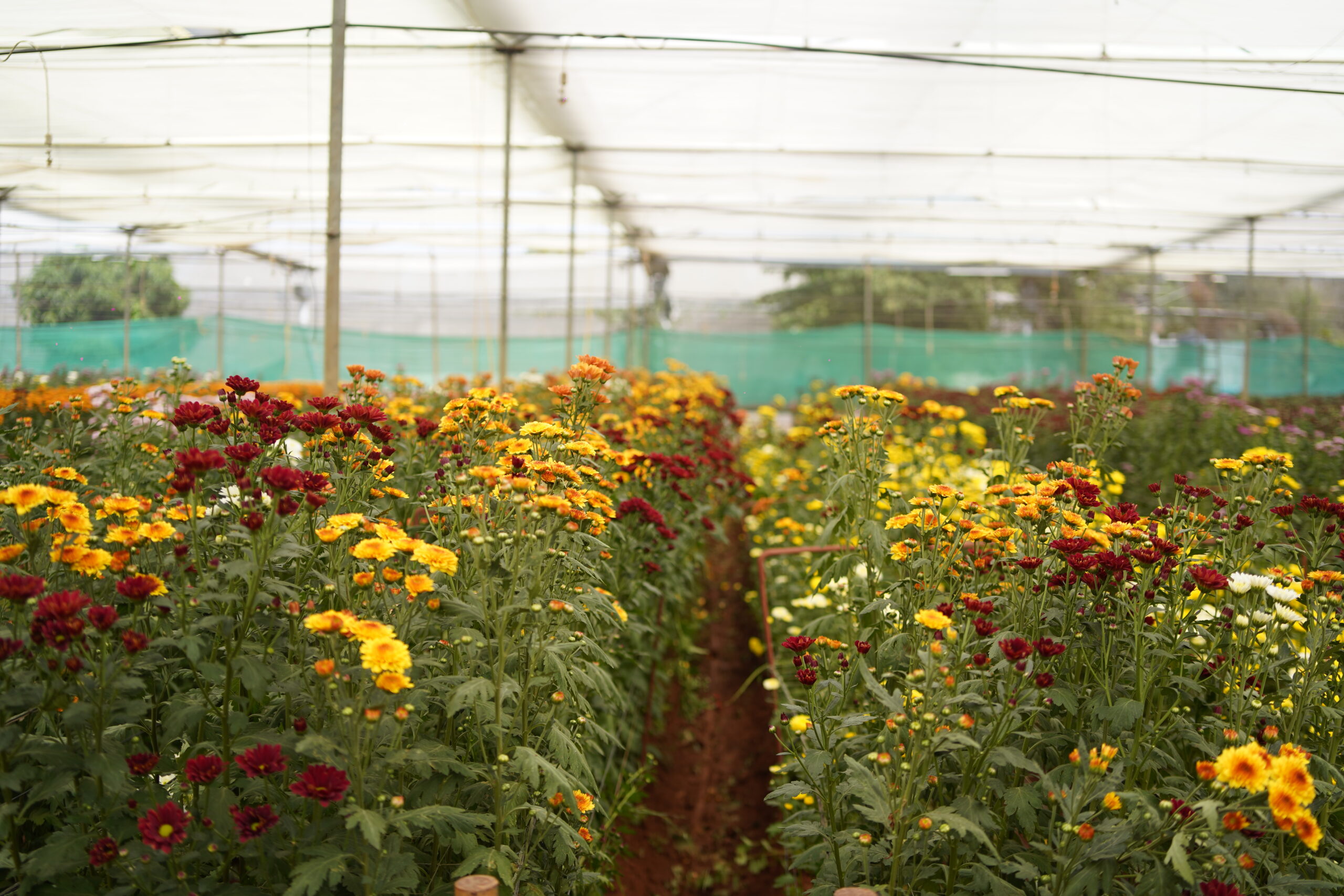
Walk through any productive flower farm in Karnataka today, and something catches your eye before the blooms do, a taut, gleaming stretch of polyfilm arched over row after row of chrysanthemum farming. It is not decorative. It is doing serious, measurable work.
Floriculture in India is on an upswing. Domestic demand is rising at weddings, festivals, and temples. Export markets are widening. And the chrysanthemum flower — versatile, high-volume, and commercially resilient- sits right at the centre of that opportunity. Yet many growers, especially those entering protected cultivation for the first time, make one consistent mistake: they treat polyfilm as a weatherproofing afterthought rather than the primary tool for crop performance.
That mindset is expensive. Here is why the right polyfilm makes everything change.
What Polyfilm Actually Controls Inside a Greenhouse
A chrysanthemum is a demanding crop. It is sensitive to temperature spikes, responsive to light duration, and vulnerable to the humidity swings that Indian summers and monsoons bring in equal measure. Open-field cultivation leaves the grower at the mercy of all three. A polyfilm greenhouse puts those variables under management.
Done right, a quality polyfilm layer simultaneously handles:
- Sunlight diffusion — scattering harsh direct rays so plants receive even, usable light without heat stress
- Temperature regulation — keeping the internal microclimate stable even when outside temperatures cross 40°C
- Humidity moderation — reducing excess moisture that invites fungal disease and weakens stems
- UV filtering — protecting petal colour intensity and extending the vase life of cut flowers
Cheap or mismatched film fails at one or more of these simultaneously. It either blocks too much light or traps too much heat. It degrades after one monsoon season. It cannot be paired effectively with darkening systems. The result is a crop that underperforms despite everything else being right.
Chrysanthemum Farming Demands Precision — Polyfilm Delivers It
In India, under natural conditions, the chrysanthemum flowering season is tightly tied to cooler months. Short days and moderate temperatures signal the plant to bloom. Outside those windows, production stalls — and revenue stalls with it.
Inside a polyfilm greenhouse, that limitation disappears. When the structure supports blackout netting alongside the film, growers can artificially create the short-day conditions chrysanthemums need to flower — at any point in the year. Harvests can be timed to coincide with Diwali, Navratri, export demand peaks, or bulk buyer windows. The production calendar becomes a business decision, not a weather forecast.
Beyond season extension, polyfilm also enables the planting density that makes chrysanthemum cultivation economically compelling. The ideal density — around 1,80,000 plants per acre — generates significant humidity inside the house. Without proper film-assisted ventilation and moisture control, that density becomes a disease risk. With the right polyfilm and structure, it becomes the yield engine.
From 5 Acres to 42: A Real-World Proof Point
Rahil, a 22-year-old grower from Doddaballapur near Bengaluru, runs one of Karnataka’s larger protected cultivation operations. He manages 42 acres of chrysanthemum greenhouses across multiple sites, built over 15 years from a 5-acre start by his father.
Across 16 varieties, including Arctic White, Big White, and three shades of pink chrysanthemum, his farm plants approximately 1,80,000 cuttings per acre, produces around 2.75 to 3 crop cycles annually, and nets roughly ₹5 lakh per acre per season. That consistent output — season after season, variety after variety — is not accidental.
Rahil attributes a significant part of this success to choosing the right greenhouse infrastructure from the very beginning. His farm serves as a working demonstration that scale in floriculture is built on controlled environments, not just sheer acreage.
Choosing the right polyfilm is crucial. We use it to control sunlight penetration and protect the plants from excessive heat. In summer, when outside temperatures reach 40°C, darkening is required to protect the plants. Our experience with GreenPro’s structures and polyfilm has been fantastic.” — Rahil, Commercial Chrysanthemum Grower, Doddaballapur
How to Grow Chrysanthemum Flower Commercially: Start with the Right Film
If you are planning to enter flower farming — or expand an existing greenhouse operation — the polyfilm decision should come early, before structures are built and certainly before a single cutting goes in the ground.
Commercial floriculturists evaluating polyfilm for chrysanthemum cultivation should look at:
- Heat load performance — can it keep internal temperatures within the crop’s comfort zone on peak summer days?
- Light diffusion quality — does it distribute light evenly or create hot spots that stress individual plants?
- Durability — will it hold up across multiple monsoon seasons without sagging, tearing, or losing transmission quality?
- Compatibility with darkening systems — essential for year-round photoperiod management
GreenPro’s approach treats the polyfilm and greenhouse structure as a single integrated system. The framing is designed to keep the film taut and properly tensioned. The film grade is matched to the crop and the regional climate. The result is a growing environment that performs consistently across seasons — which is ultimately what makes floriculture a business, not a gamble.
The Infrastructure Behind Every Good Harvest
India’s floriculture opportunity is real and growing. But opportunity does not fill harvest crates — execution does. And at the execution level, the decisions that matter most are often structural: the soil prepared, the variety selected, the density managed — and the polyfilm installed.
Chrysanthemum farming, when done right in a quality greenhouse environment, is one of India’s most consistent agribusiness opportunities. The film over your structure is the first and most constant line of defence for that business. Choose it well, and it pays back across every cycle for years to come.
Ready to upgrade your greenhouse infrastructure?
Contact GreenPro Ventures today to find the perfect polyfilm solution for your farm. Protect your crops, grow your yield, and prosper season after season.