
3‑Layer → 5‑Layer → GreenPro 7‑Layer Films Transforming Indian Farming
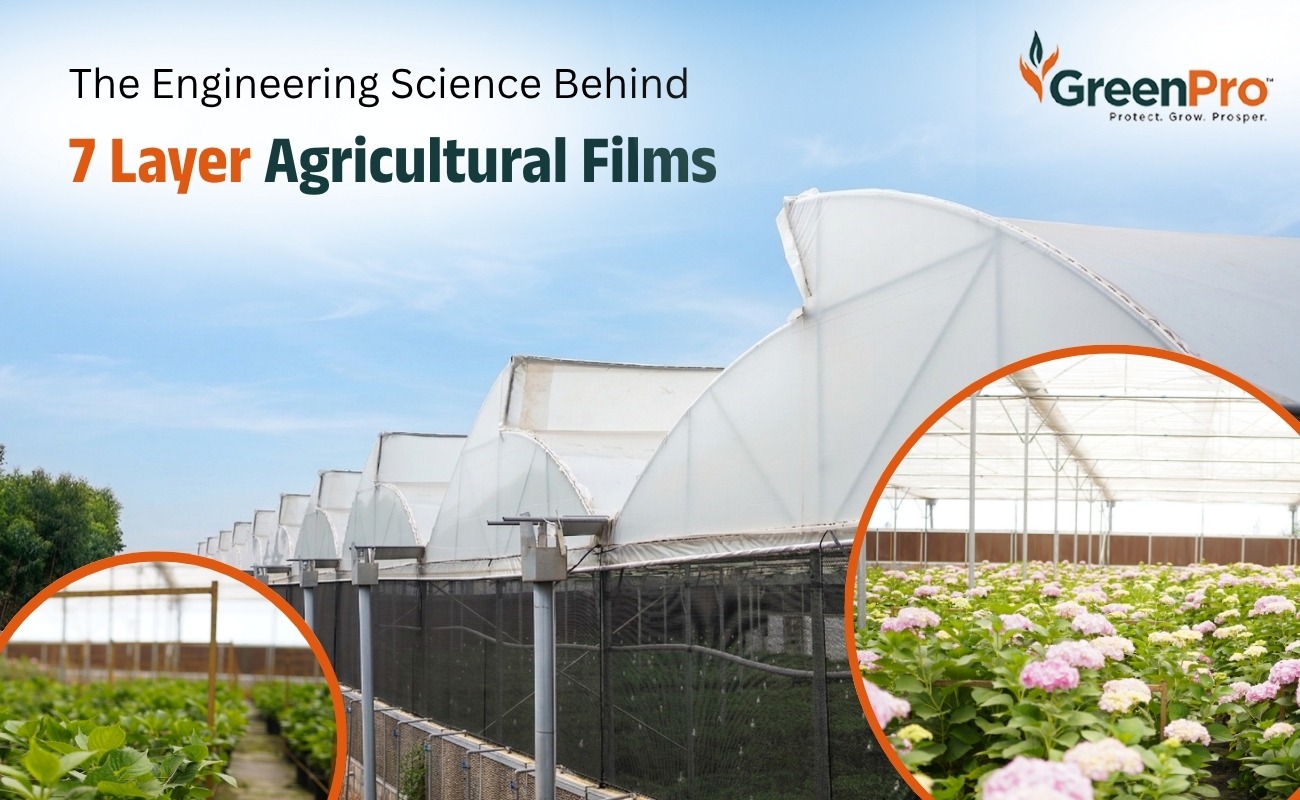
Agricultural films work hard every single day. A greenhouse cover must survive strong winds across multiple seasons. A mulch film must resist sharp stones and crop stubble for months. A silage wrap must stay airtight through freezing nights and scorching afternoons.
For years, farmers simply accepted film failures as part of the job — patching holes, replacing torn covers, and absorbing the cost. That is now changing, thanks to 7-layer co-extruded film technology.
Let’s see what 7-layer films are, how they outperform traditional 3-layer films, and why farmers and dealers across India are making the switch.
What Are 7-Layer Agricultural Films?
Co-extrusion is a manufacturing process in which multiple plastic layers are fused together in a single step. Each layer bonds permanently with the ones around it; they do not peel apart under field conditions.
- A 3-layer film gives manufacturers three zones to work with. Each zone must handle several jobs at once: strength, UV protection, and flexibility, all crammed into the same layer. The result is a compromise.
- A 7-layer film gives seven independent zones. One layer handles UV protection. Another locks in strength. A third manages flexibility. Each material is placed exactly where it performs best. Nothing is asked to do more than one job at a time.
Think of it like a team: when one person handles everything, quality suffers. When each specialist focuses on their strength, the whole team performs better.
7-Layer vs 3-Layer: Agriculture Films At a Glance
Feature | 7-Layer Film | 3-Layer Film |
| Lifespan | 5+ growing seasons | 2–3 growing seasons |
| Puncture Resistance | High – handles rocky & debris-rich soils | Moderate – tears easily on sharp surfaces |
| UV Durability | Dedicated UV layer, no strength loss | The UV additive mixed in weakens the core |
| Tear Resistance | Cracks stopped at each layer boundary | Tears spread quickly across layers |
| Wind Fatigue Handling | Flexible – moves with the structure | Rigid – stress cracks at fixing points |
| Oxygen Barrier (Silage) | Even tension, minimal pinholes | Pinhole risk during bale wrapping |
| Cost Efficiency | Lower cost per crop cycle | Higher replacement frequency |
Real-World Benefits for Farmers
- Greenhouse Growers – Tomatoes, Capsicum, Cucumbers
A 7-layer greenhouse film stretches with the wind instead of fighting it. This flexibility prevents cracking at the clamp and fixing points, exactly where 3-layer films fail first. Farmers growing tomatoes and capsicum in poly-houses report film lifespans of 5+ seasons compared to just 2–3 seasons with standard films. Fewer replacements mean fewer disruptions to the growing cycle. - Mulch Films – Watermelon, Strawberry, Vegetables
Mulch films are pressed directly onto soil that contains stones, root stubble, and sharp debris. A 7-layer mulch film’s multi-barrier structure prevents punctures from becoming tears. Watermelon and strawberry growers benefit from consistent soil moisture and weed suppression throughout the full growing season, without patching film mid-crop. - Silage Films – Dairy & Livestock Farmers
When bale-wrapping machinery applies high tension during silage wrapping, tiny pinholes can form in standard films. These pinholes allow air in, which ruins fermentation and spoils feed. A 7-layer silage film distributes wrapping tension evenly across its layers, dramatically reducing pinhole formation. Dairy farmers benefit from better fodder preservation and reduced feed waste.
- Greenhouse Growers – Tomatoes, Capsicum, Cucumbers
Why Dealers and Distributors Prefer 7-Layer Films
Stocking 7-layer agriculture films is a business upgrade, not just a product upgrade. Here is what dealers consistently report:
- Fewer complaints: Longer film life means fewer calls about early failures or replacement requests.
- Higher margins: Premium product positioning enables better pricing than commodity 3-layer films.
- Stronger farmer loyalty: When a product performs as promised, farmers return and refer others.
- Easy differentiation: Dealers who carry certified 7-layer films stand out from competitors offering standard alternatives.
- Growing demand: Large-scale protected cultivation projects now specify multi-layer film requirements in procurement documents.
Does 7-Layer Agriculture Films Cost More? Here Is the Real Calculation
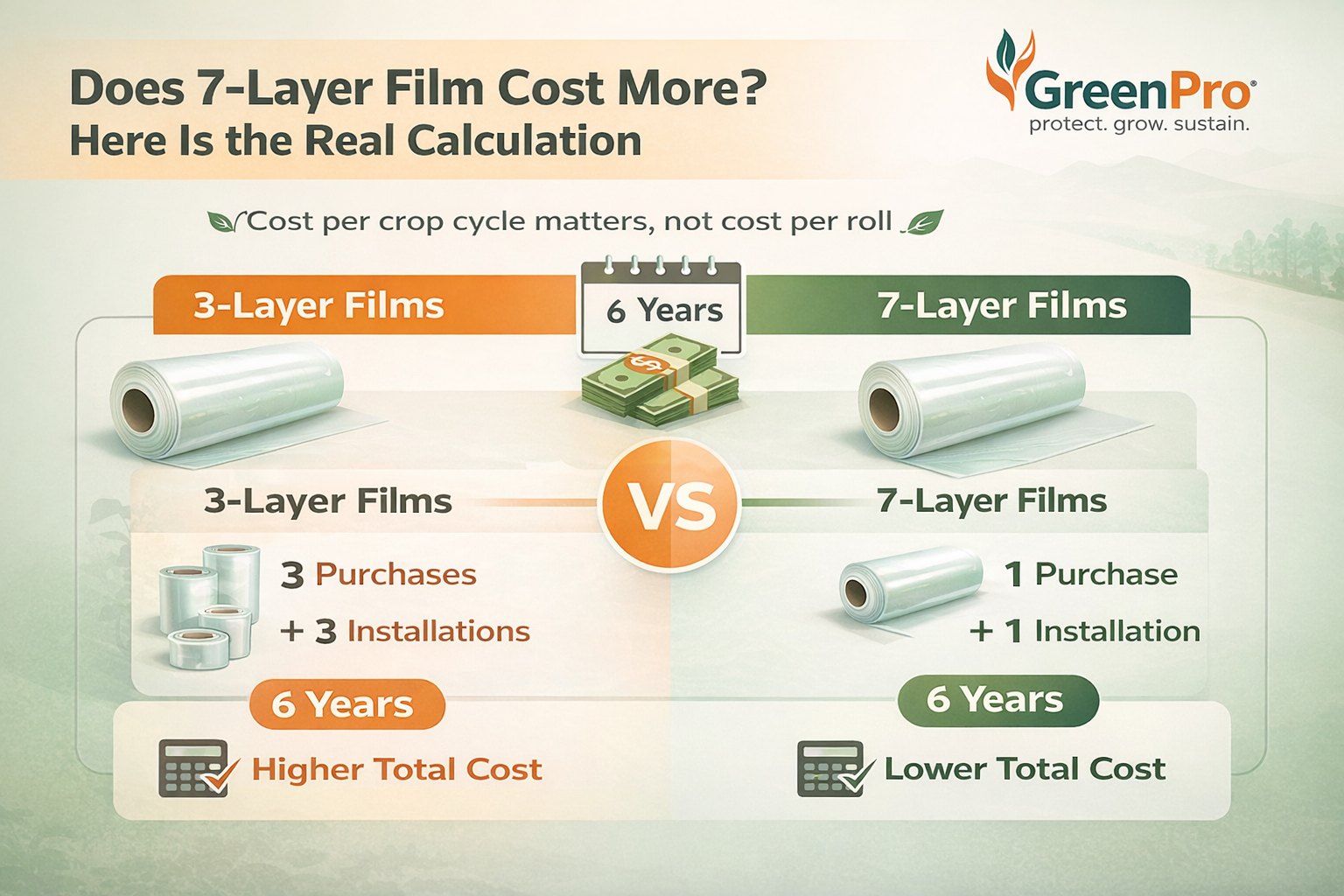
Yes, 7-layer films carry a higher upfront price. But the right comparison is cost per crop cycle, not cost per roll.
Example: A 3-layer greenhouse film replaced every 2 seasons over 6 years = 3 purchases + 3 installations. A 7-layer film lasting 6 seasons = 1 purchase + 1 installation. Even at a higher unit price, the total cost is lower, and the disruption to your crop cycle is far less.
Factor in reduced labour for replacement, fewer crop losses from unexpected film failure, and the value of undisturbed growing conditions, and the economics become clear.
Ready to Upgrade Your Farm Film?
7-layer agricultural films are not a marketing upgrade; they are a real engineering improvement with measurable results in the field.
GreenPro Ventures offers a complete range of advanced 7-layer films designed specifically for Indian farming conditions, backed by hands-on technical support and proven long-term field performance.